Expertise: Helium Development

  • Helium Tolling Expansion

    Helium Tolling Expansion

    The Challenge

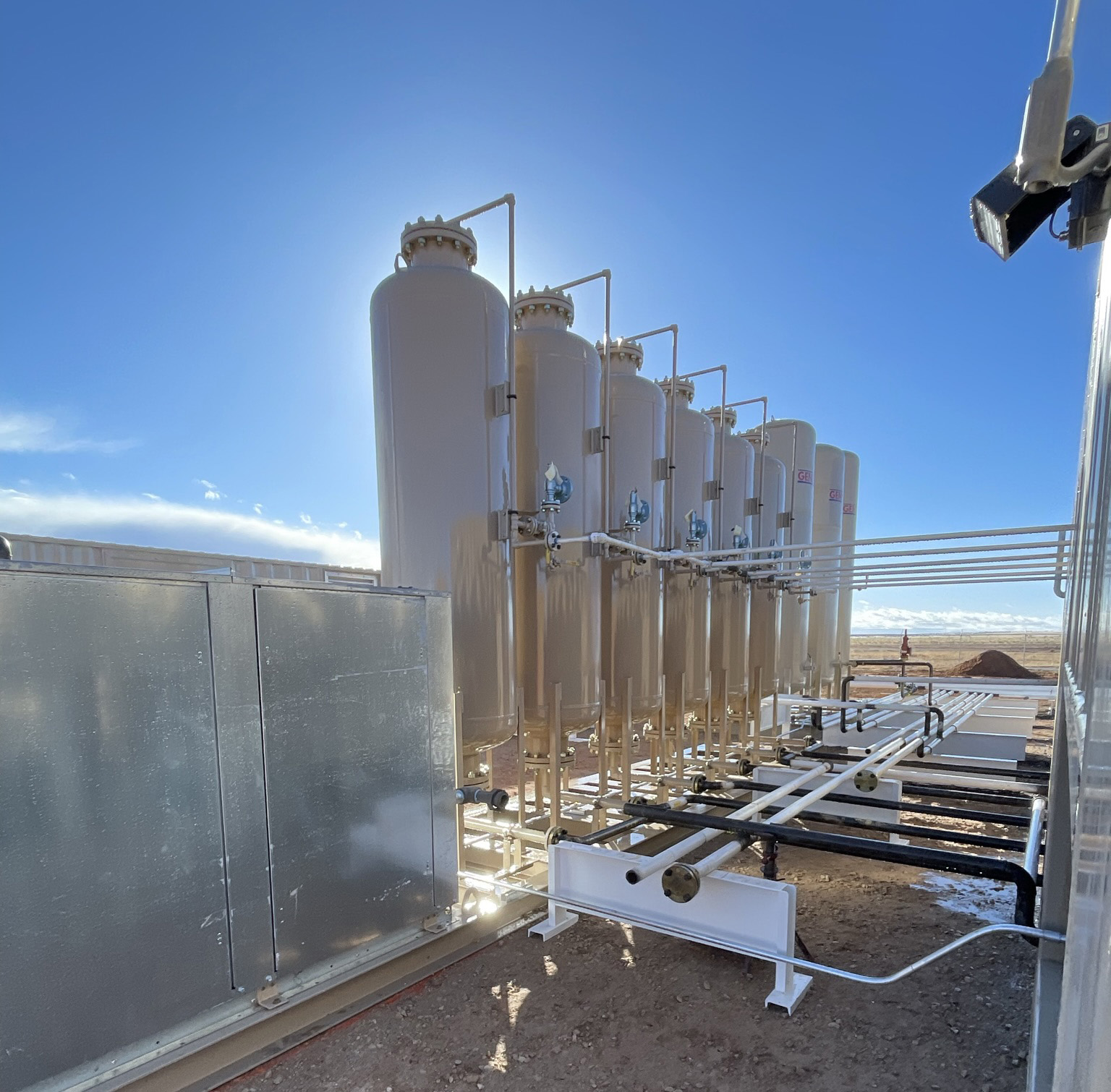
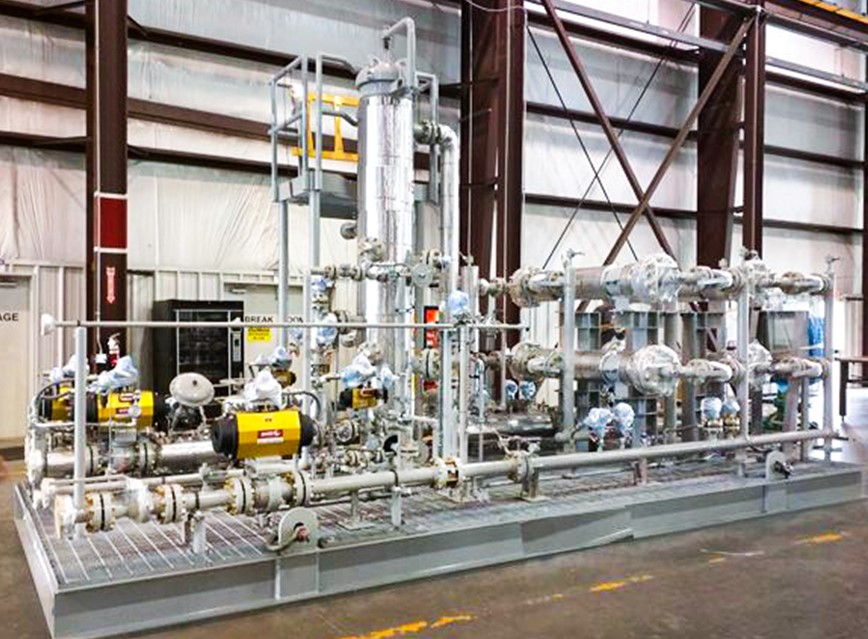
    Our client was developing a helium basin and needed to process the raw gas production at a central facility to concentrations of 95% or better to meet tolling contracts. The project required the facility to be expanded to handle a doubling of raw helium production to 4 MMSCFD. The client required expandable trailer filling capacity as the field developed to meet product takeaway. The project timeline incorporated a phased build approach to meet current processing needs and future expansion plans.

    The Solution

    CANUSA EPC visited the site to review the current facility capabilities and worked with a technology provided to expand the front-end membrane capacity.  Loadout for the additional capacity was executed by expanding the number of Bauer compressors to fill additional trailers.

    Provided process and mechanical design to increase the inlet capacity of the system

    • Raw inlet gas treatment design to remove water and meet dew point for separation
    • Membrane package specification, evaluation, and procurement to meet required helium purity
    • Future membrane series deployment for enhanced throughput at the lowest cost solution

    Evaluation of utility needs

    • Developed an electrical design package that could utilize the existing onsite power
    • Identified limits to the current site transformer for expansion

    Vendor evaluation and support for procurement

    • Managed vendor design deliverables to determine the balance of plant requirements
    • Evaluated commercial offerings to provide recommendations that aligned with the Client’s needs

    The Results

    Provided project designs that allowed for expansion of the facility as wellhead gas production increased

    • Scalable solution for the addition of future membranes, without large upfront capital costs
    • Confirmed utility requirements, avoiding the need to invest in additional utility scope and costs
    • Leverage technology vendor’s expertise on membranes to meet the Client’s requirements
  • CO2 Removal from Helium

    CO2 Removal from Helium

    The Challenge

    ANUSA EPC was tasked with evaluating cost-effective methods of removing CO2 and heavy hydrocarbons from the raw helium production gas of an existing helium polishing plant. Due to unusually high concentrations of contaminants, the plant was unable to achieve its target helium purity at the facility’s nameplate capacity. Operational difficulties were forcing the plant to run below its rated capacity, leading to lost revenue.

    The Solution

    CANUSA EPC conducted a FEED study to evaluate several different options to remove contaminants while minimizing helium losses and plant downtime.

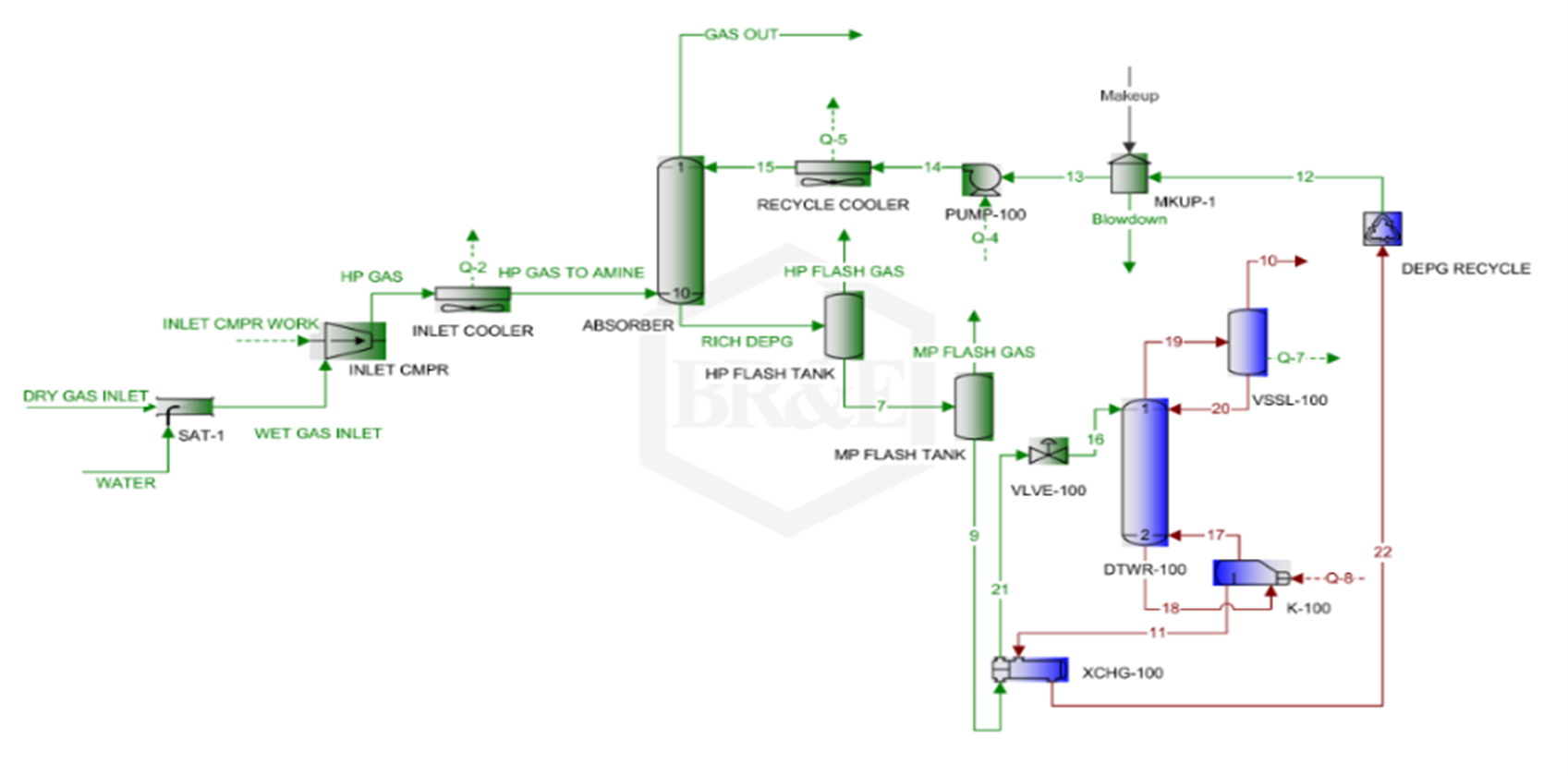
    • Process models built in ProMax based on helium gas analysis and operating conditions
      • Modeled the efficiencies of chemical solvents for CO2 removal in an amine absorber
      • Modeled solvent regeneration power load of all options
      • Modeled inlet compression to optimize containment removal
    • Chemical solvent evaluation
      • Evaluated feasibility of chemical solvents, physical solvents, membranes, desiccant adsorbents, and charcoal filters for contaminant removal
      • Contacted vendors for level-four cost estimates and lead times
    • Evaluated OPEX changes
      • Evaluated options for lowering OPEX by utilizing hydrocarbon contaminants for heat generation
      • Considered opportunities to lower OPEX and increase equipment efficiency by utilizing heat exchangers

    Result: Higher Rates Of Recovery Of Helium

    • We provided results of advantages/disadvantages of options considered
      • Included vendor data and special considerations
      • Provided Class IV CAPEX and OPEX for all evaluated options
      • Provided projected schedule for development
    • Solution pursued by the client would reduce PSA cycles, leading to a higher rate of recovery of Helium
  • Multi-well Helium Purification Battery

    Multi-well Helium Purification Battery

    The Challenge

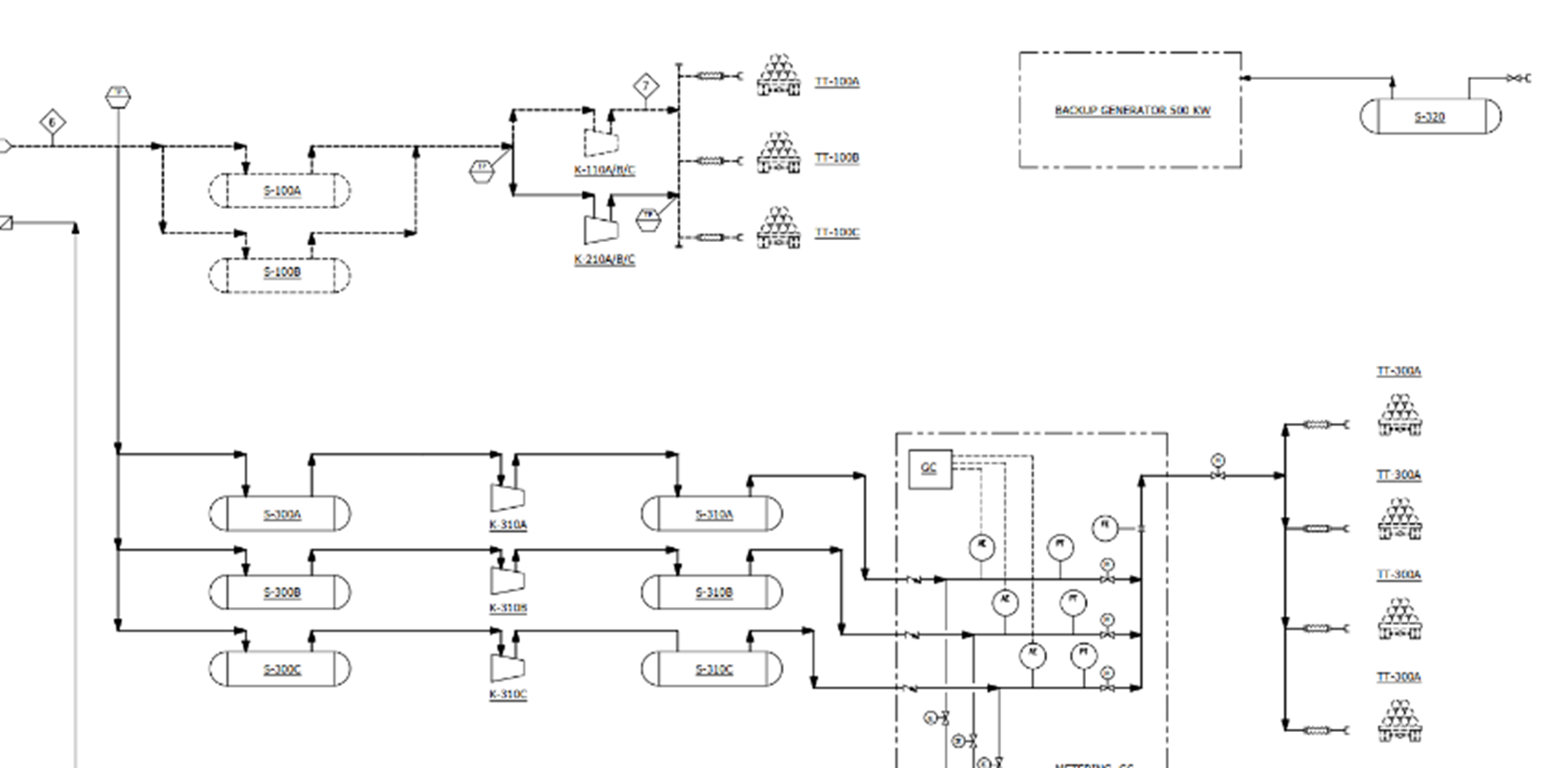
    The client wanted a processing facility to be built where a raw gas inlet from four wells would be separated into a helium product with a 99.9+% purity, with future expansion in mind. A few of the challenges the client faced included the implementation of multiple wells into the facility, a desire for a portable system, and the need to generate power onsite with no fuel sources readily available.

    The Solution

    CANUSA EPC first engaged by performing an initial FEED study to identify what the scope of the project would need to be, and what would be required to make the client’s requests possible. After the FEED study, we provided full-service EPCM support.

    • Project management
    • Procurement & expediting of equipment
    • Facility process design & engineering
    • PHA & safety analysis
    • Facility 3D Modeling, piping & instrument design
    • Power generation & distribution
    • Grading plan & pile layout
    • Structural design & engineering
    • Major equipment factory acceptance testing
    • Controls programming support
    • Construction support

    The Results

    Capacity & Purity

    • Facility provides 5 MMSCFD inlet capacity and sales product purity of up to 99.996% helium, or grade H4.6 helium utilizing a PSA system.

    Portable Capability

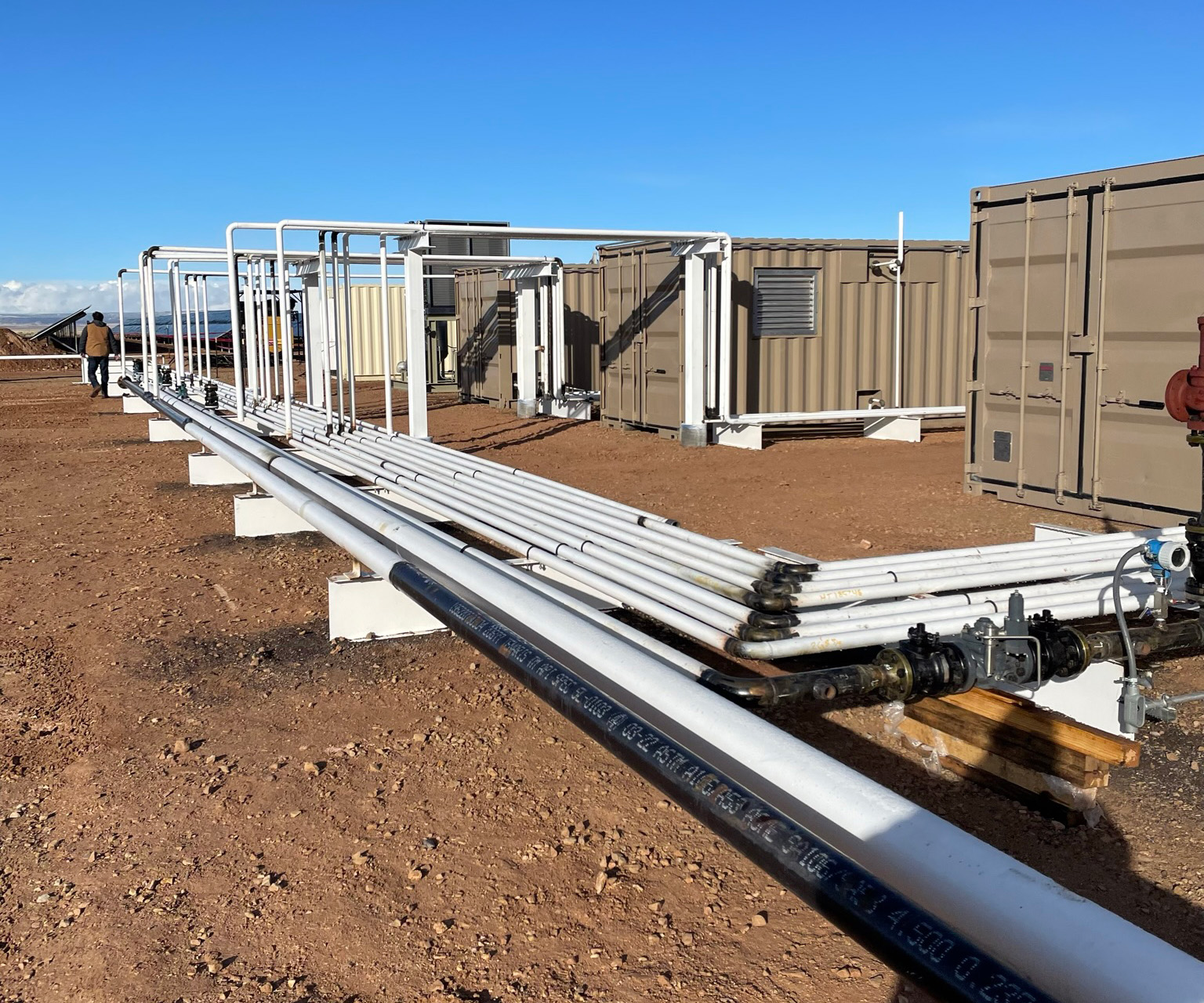
    •  Fully-skidded, mobile equipment in sea-can structure allows the Client to reuse and relocate the facility wherever it is needed.

    Power Generation

    • Onsite power was generated with a compressed natural gas service while a renewable energy system was constructed.