Managing water in CO2 streams is critical to avoid corrosion, downtime & delays. A dehydration study provides an analysis to select the proper technology to mitigate risk & meet project goals. Dehydration technology selection often involves trade-offs between cost, efficiency, and future expandability.
A comprehensive and unbiased study gives you the confidence to choose the right solution without surprises. What factors are essential in a valuable dehy study? Read more inside.
This guide includes:
Hidden threats of water in CO2 streams
Essential components of a CO2 dehydration study framework
CANUSA EPC has prepared the following analysis related to the feasibility of carbon capture from the exhaust streams of natural gas driven compressors at a compressor station located in North America. This analysis is based on CANUSA EPC’s experience with carbon capture technologies, applying those existing technologies to exhaust gas from post-combustion processes, and leveraging our project expertise with compressor stations.
The basis of the analysis considered 27 metric tons per day (MTPD) from a single engine unit, 189 MTPD from seven (7) units, and 300 MTPD with an exhaust stream of 5.59 mol % CO2. Available technologies allow for a recovery of 90 mol % CO2 and a purity of 98 mol % CO2. The findings of the white paper identify the normalized value of CO2 for the various flow rates to develop the economics of these projects. *Based on 2023 industry developments.
The Inflation Reduction Act (IRA) has been an active policy since August 16th, 2022. As the law has evolved, navigating this laws requires an understanding of how to structure projects to meet the requirements. Requirements for Inflation Reduction Act CO2 projects are governed by two sections of the law. 45Q covers the tax policies related to facilities sequestering CO2 and the rebates available to those companies based on how the CO2 is sequestered or used. Sunset timelines for 45Q are December 31st, 2032. 45Z is related to rebates for low-carbon fuel production, where CO2 capture can be used to reduce the carbon intensity of those fuels for a rebate. 45Z’s timeline is applicable for production between January 1st, 2024 and December 31st, 2027.
As the industry has sought to utilize these rebates, comments and clarifications have been provided. We are sharing how some of those clarifications should be considered in your project execution of facilities and products making use of IRA rebates.
Implications in CO2 Facility Execution for IRA Rebates – 45Q and 45Z
There are two major factors in requirements for Inflation Reduction Act CO2 projects. Ensuring that your project considers these requirements and aligns with your contracting strategy for the facility is key to being able to claim the rebates for your project. Meeting these requirements can lead to 5x the rebate from the project, sometimes up to 50% of a project’s capital cost.
What is the prevailing wage and who governs it?
The prevailing wage is a locality-based wage measurement tracked by the Department of Labor.
“A prevailing wage is the combination of the basic hourly wage rate and any fringe benefits rate, paid to workers in a specific classification of laborer or mechanic in the geographic area where construction, alteration, or repair is performed, as determined by the Secretary of Labor in accordance with subchapter IV of chapter 31 of title 40 of the United States Code, also known as the Davis-Bacon Act.”
The apprenticeship requirements have increased since the law was signed.
“Taxpayers shall ensure that, with respect to the construction of any qualified facility, not less than the applicable percentage of the total labor hours of the construction, alteration, or repair work (including such work performed by any contractor or subcontractor) with respect to such facility shall, subject to subparagraph (B), be performed by qualified apprentices.
In the case of a qualified facility the construction of which begins after December 31, 2023, 15 percent.”
Managing Prevailing Wage and Apprenticeship Requirements for the IRA
Execution strategy can be used to limit exposure and ensure compliance for successful rebates. Focusing on the definition of a “qualified site” and a secondary site will allow projects to limit the scope that applies to the requirements. Clarifications to this were provided on June 25th by the Department of the Treasury.
The structure of the contract terms, including penalty clauses and remediation for the failure to meet and document the requirements should be another focus of the project execution plan. Secure legal counsel who is familiar with this law and industrial contract negotiations for the review of the contracts. GrantThorton has some summaries on their website that convey they are experts in the matter and there are many other legal firms out there that can help.
All projects have similar milestones for evaluation, selection, funding, definition, and execution. During the project evaluation and selection process, discuss the IRA requirements. At CANUSA EPC, being transparent with the project stakeholders throughout the project allows the team to progress with the execution while staying aligned with the goals of the client. We don’t claim to provide problem free projects, but we do hold the expectations of our team and clients to work through the problems in a transparent manner.
Reach out if you have any questions or comments, and we will be happy to provide our expertise to your team. Project experience from CANUSA EPC related to CO2 can be found at our expertise page.
CO2 capture and liquefaction is a process that converts gaseous carbon dioxide into liquid form, which can then be stored or transported for various applications. CO2 capture and liquefaction is an important technology for reducing greenhouse gas emissions and meeting lower carbon products. However, CO2 capture and liquefaction also require a significant amount of energy, especially for the compression of CO2 gas. Therefore, it is important pick the proper drive and compression technology to manage the “parasitic load” associated with processing the CO2.
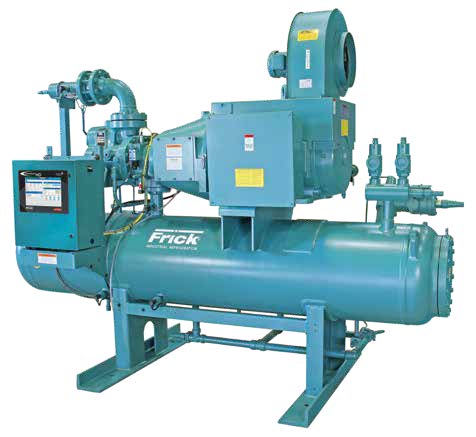
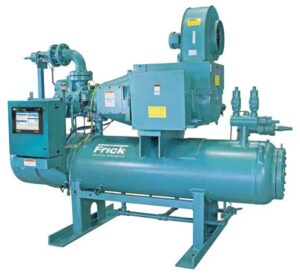
Screw compressors are widely used in CO2 liquefaction and capture facilities, as they can handle large volumes of gas and are common in refrigeration loops for the liquefaction process. Screw compressors typically use slide valves for unloading and capacity control, which adjust the internal volume of the compressor to match the process demand. However, using slide valves does not reduce the power requirements of the compressor as much as reducing the speed of the compressor would. Therefore, at reduced throughput, using variable frequency drives (VFDs) to control the speed of the screw compressors compared to slide valves provides lower energy usage.
Evaluating Screw Compression at CO2 Liquefaction Facility
In this analysis, we will present a case study of a 1000 metric ton per day (MTPD) CO2 liquefaction facility that used screw compression as the main driver and for cooling of the process. We will compare the performance and energy consumption of the screw compressors using slide valves and VFDs and show how VFDs can offer significant benefits in terms of:
efficiency,
reducing operating costs,
and providing a lower carbon intensity for the ethanol product.
We analyzed the data of a 1000 MTPD CO2 liquefaction facility that used electric driven screw compressors for the main compression and cooling stages of the process. The facility had a total of ~6500 kW of screw compressor load, consisting of three main compressors and 3 cooling compressors. The main compressors were designed to compress CO2 gas, and the cooling compressors were designed to provide refrigeration for the process.
Methodology: Comparing Slide Valves & VFDs
We compared the performance and energy consumption of the screw compressors using two different methods of capacity control: slide valves and VFDs.
Slide valves are mechanical devices that change the internal volume of the compressor by sliding a valve along the rotor, thus varying the amount of gas that enters the compression chamber.
VFDs are electronic devices that change the frequency and voltage of the electric supply to the compressor motor, thus varying the speed of the compressor.
We assumed that the facility is operating at 75% of its design capacity, which is a possible scenario for CO2 liquefaction and capture facilities based on the cycling that happens with fermentation.
We also estimated the capital cost and the operating cost of the screw compressors using slide valves and VFDs. For using slide valves, it was assumed that the compressors would be started with soft-starts. We assumed that the operating cost of the screw compressors was mainly determined by the electricity cost, which was $0.13 USD per kWh.
Results
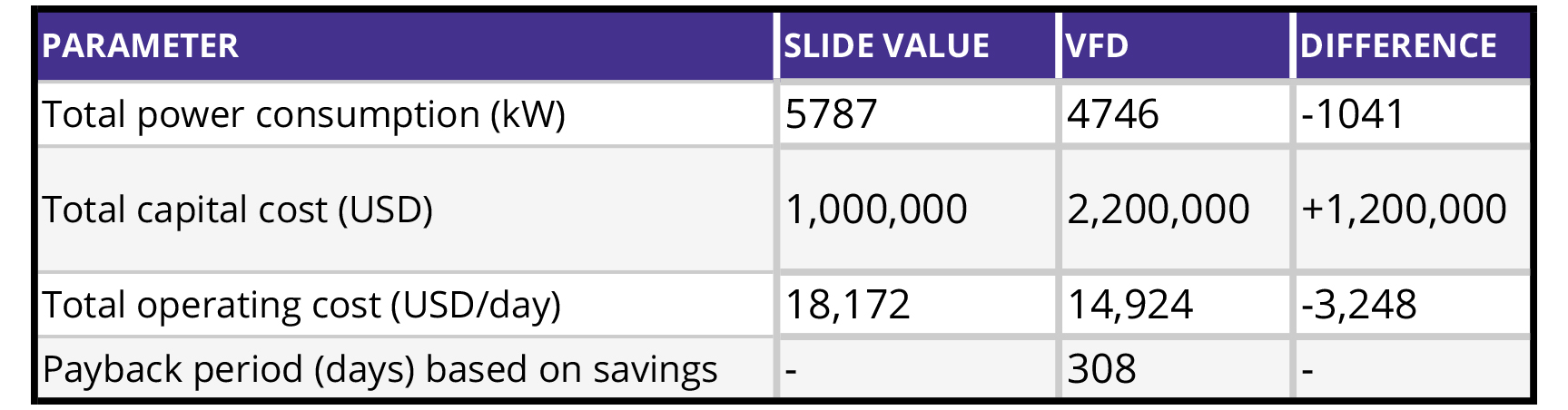
The results of our analysis are summarized in the table below.
As shown in the table, using VFDs to control the capacity of the screw compressors resulted in a 18% reduction in power consumption, compared to using slide valves. This translates to a 18% reduction in operating cost, which amounts to $3,248 USD per day in savings from lower power demands. On the other hand, using VFDs increased the capital cost of the screw compressors by 50%, which amounts to $1,000,000 USD.
Impact on Facility Profits
The results of our case study demonstrate that using VFDs to control the capacity of the screw compressors in CO2 liquefaction and capture facilities is economical if reduced capacity is anticipated. What determines the economics will be the duration of the reduced operations and the CO2e of the kWh.
Although VFDs have a higher capital cost than slide valves, the payback period of the VFDs is relatively short, as the operating cost savings are significant. Moreover, VFDs can help CO2 liquefaction and capture facilities achieve their environmental and social goals (45Z) as a low carbon fuel product, as they can reduce the greenhouse gas emissions and the energy intensity of the process.
Conclusion: VFDs Offer Significant Benefits
Are VFDs right for your facility? Using VFDs on screw compressors for CO2 liquefaction facilities can offer significant benefits in terms of efficiency and cost savings, compared to using slide valves. VFDs can reduce the power consumption and the operating cost of the screw compressors by 18%. In a reduced operating scenario of 75%, the payback period of the VFDs is only 308 days. Additional revenue increases can be recognized as well based on the CO2e of the kWh used in the liquefaction, as it will affect the multiplier of the government credits for 45Z.
Therefore, we recommend that when considering CO2 liquefaction, engineering should work to determine the anticipated average flow of CO2 product compared to the maximum capacity of the facility to determine the drive technology.
CANUSA EPC provides engineering, procurement, and construction management for CO2 liquefaction and capture facilities across North America. We focus on aligning the processing requirements with operational strategies to optimize your return on investment in these facilities. If you are interested, please contact us.