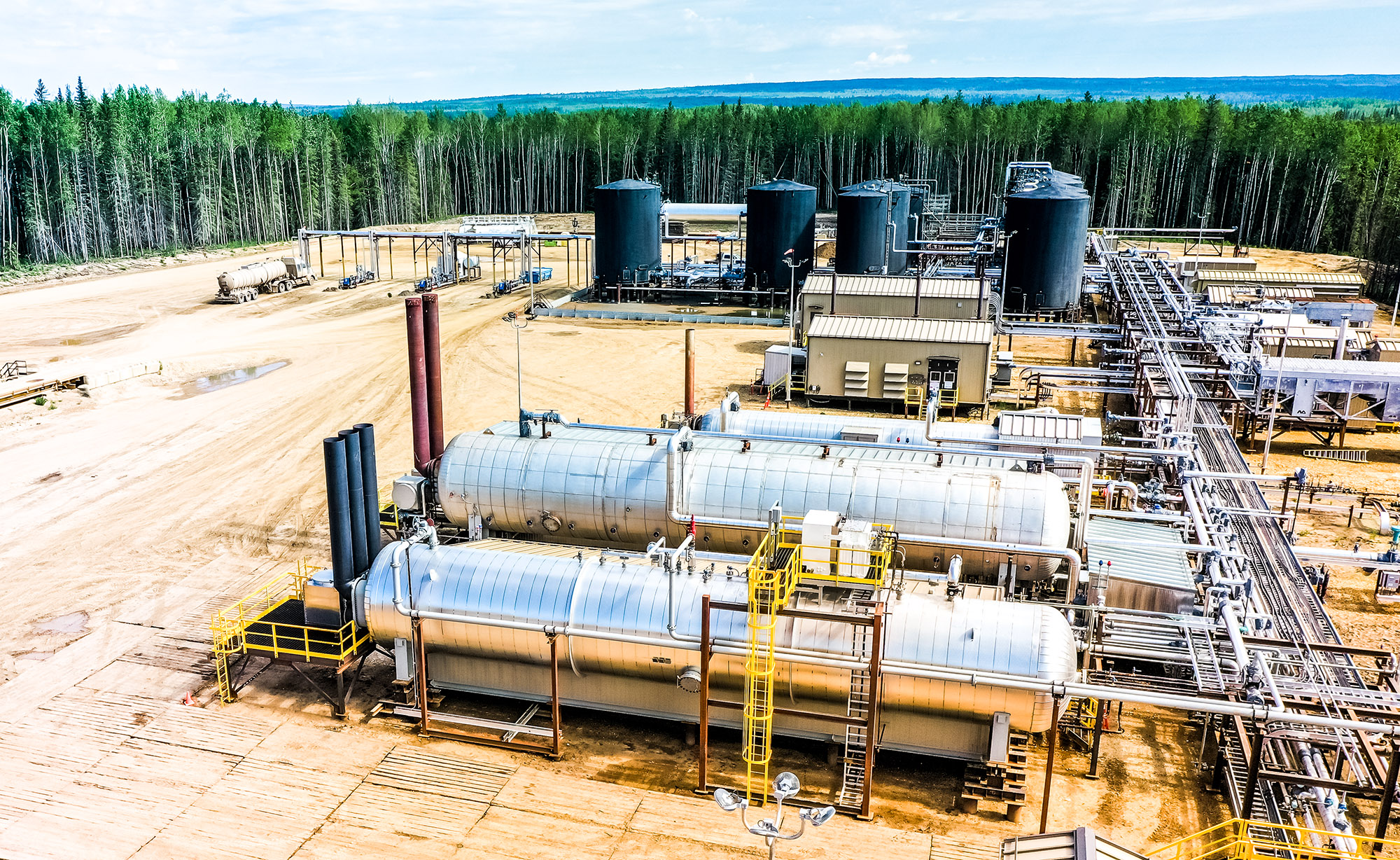
Location: Marten Hills, AB

  • Heavy Oil Battery

    Heavy Oil Battery

    The Challenge

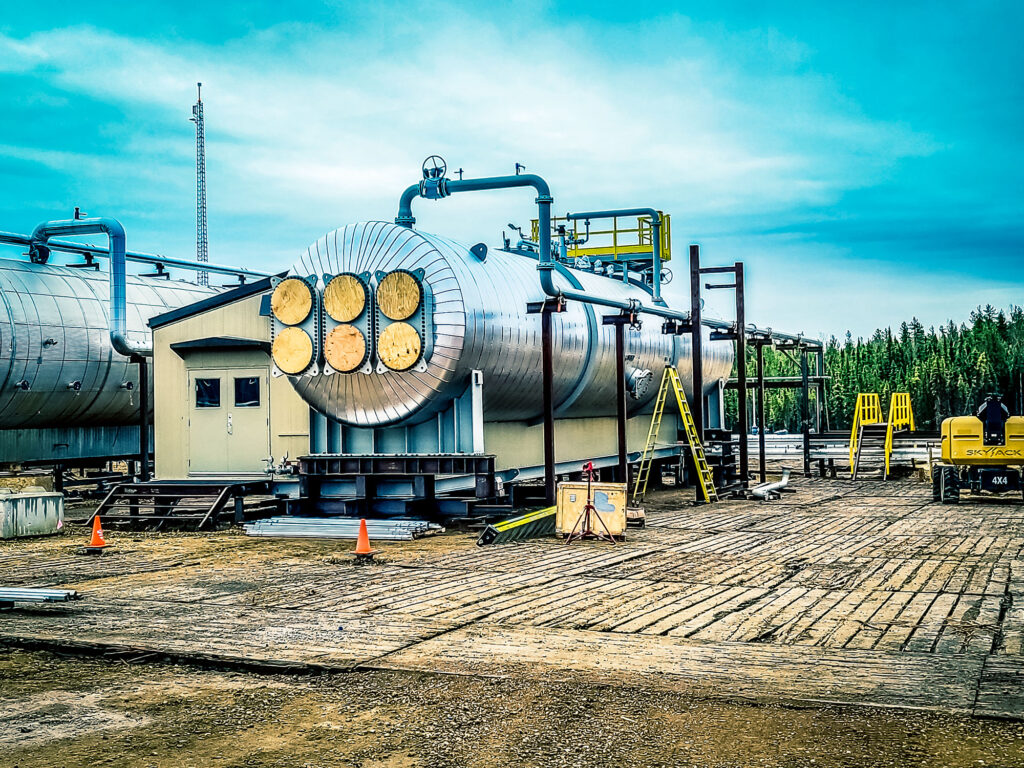
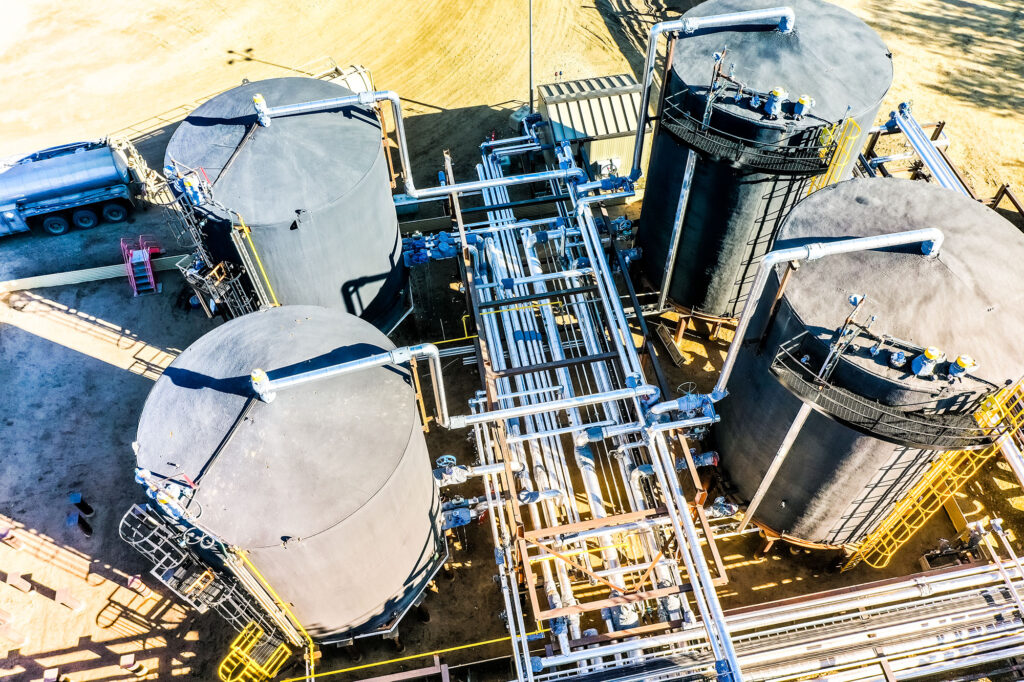
    Additional oil production from the Clearwater formation required our client to increase the processing capacity of an existing heavy oil battery from 8,000 BPD to 15,000 BPD. Due to the future plans to convert the field to waterflood, the upgraded battery equipment needed to be adequate to handle future water volumes. Functionality for crude oil blending with condensate and NGL was required to meet RVP, density, and viscosity specifications in the sales oil pipeline.

    The Solution

    CANUSA EPC was contracted to offer Engineering, Procurement and Construction Management (EPCM) services.

    Developing a Plan to Meet Client Expectations:

    • Leveraged CANUSA EPC’s previous battery design experience
    • Developed a DBM to manage design expectations
    • Developed a PEP and schedule to efficiently manage execution

    Sourced New Equipment:

    • Oil and Water Tanks
    • Electrostatic Heater Treater
    • Glycol Boiler and Cooler
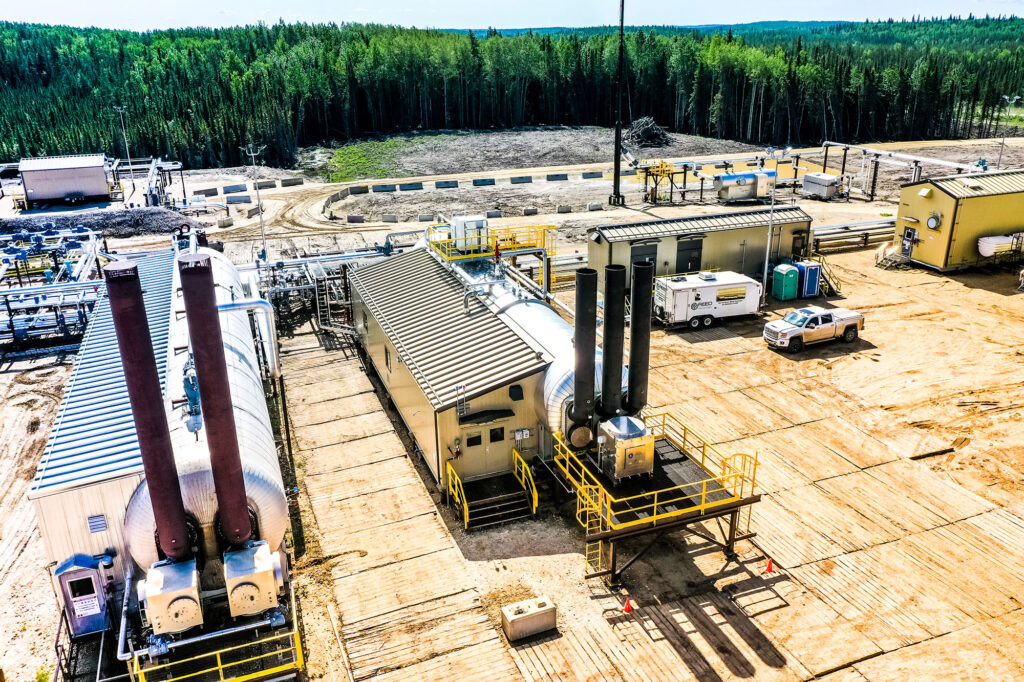
    • Waste Heat Recovery Building
    • LACT Sales Oil Booster Pump
    • Sales Oil Blending Package

    Execute Value Engineering to Support the Project Schedule:

    • Identified operational improvements for the upgraded battery
    • Automated tank selection and facility de-sand
    • Rectified deficiencies discovered in the existing battery during construction

    The Results

    • Increased oil production from 8,000 BPD to 15,000+ BPD
    • Lowered emissions of produced oil
      • Implementation of a VRU to the tank farm
      • Utilizing electrostatic treater to reduce energy and chemical requirements of treating oil
      • Waste heat recovery reducing overall plant fuel gas consumption
    • Operations improvements
  • Reduced Emissions with Heat Recovery

    Reduced Emissions with Heat Recovery

    The Challenge

    CANUSA EPC was tasked with adding heat trace (piping freeze protection) and building heat to a gas plant. It was noted that there was a large amount of waste heat being released into the atmosphere from cooling oil at the adjacent oil battery. The Client wanted to investigate if there were options to utilize this waste heat, reducing operating costs and GHG emissions. The heat source was provided at 60°C where typical glycol heating systems operate at a minimum of 90°C.

    The Solution

    The heat duty required for providing heat to the facility was approx. 3.5MMBTU/hr and the heat duty available from cooling the oil was 10MMBTU/hr. CANUSA EPC designed a unique system based on a proprietary calculation model to utilize the warm glycol exiting the oil cooler at 60°C.

    Developing a Plan to Meet Client Expectations

    • Leveraged our in-house process and design experts
    • Developed and managed installation scope to meet existing project schedule

    Sourced New Equipment:

    • Glycol boiler
    • Glycol cooler
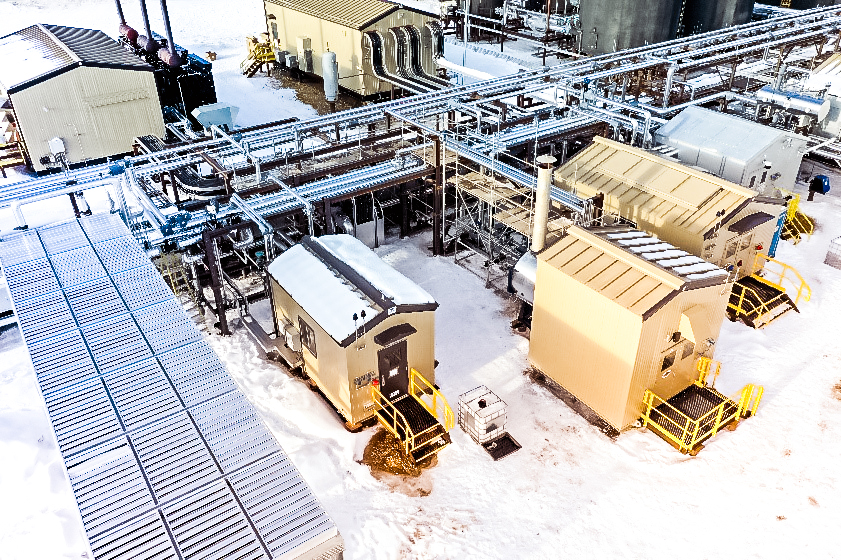
    • Waste heat recovery building
    • Glycol pump
    • Glycol heat trace and supply/return manifolds
    • Glycol building heaters

    Execute Value Engineering to Support the Project Schedule

    • Rigorous heat duty and heat transfer calculations to maximize efficiency
    • Hydraulic modeling of the GHT system
    • GHT and manifold isometrics to control costs of installation

    The Results

    Lowered emissions of the facilities

    • Eliminated 4.4 MTPD of CO2 equivalent emissions

    Lowered annual facility operating costs

    • Estimated $100,000+ CDN/year OpEx savings

    Integrated waste heat recovery

    • Designed and implemented a GHT system to operate with 60⁰C warm glycol